Can Anonymous Chat Actually Be Safe? How Talktive Protects Your Peace

Talktive Editorial
August 8, 2026 • 5 min read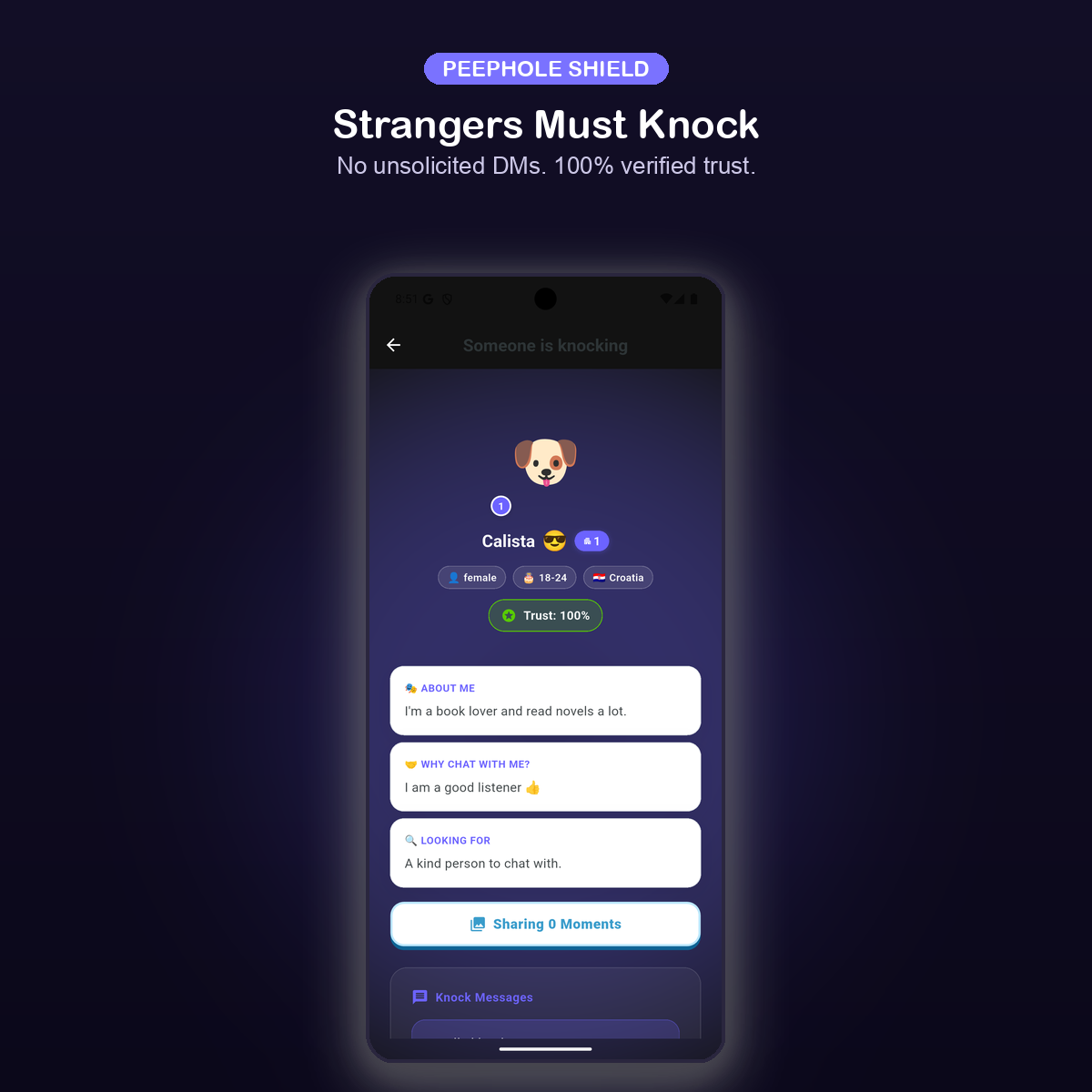
Mention the phrase "anonymous chat app," and for most people who grew up on the internet, a wave of discomfort instantly follows.
We all remember the early days of anonymous web roulette. You opened a browser tab, clicked a button, and were immediately paired with a total stranger. Within three seconds, your screen was inundated with offensive text, bots pitching sketchy financial schemes, unsolicited webcam feeds, or abusive trolls trying to provoke a reaction.
For years, the conventional wisdom of the internet seemed simple: Anonymity breeds chaos.
Whenever people were stripped of their real identities and real-world accountability, online spaces quickly spiraled into digital wastelands.
Yet at Talktive, we asked a fundamentally different question: Was anonymity truly the flaw—or was it flawed architecture?
"Privacy isn't about hiding something bad. It's about protecting something fragile: your peace of mind, your emotional truth, and your right to be heard without fear."
The truth is that anonymity is not inherently toxic. In fact, when combined with intentional architecture, empathy-first design, and rigorous boundary control, anonymous chat can become the safest, most restorative corner of your digital life.
The Broken Blueprint of Early Chat Platforms
To understand why Talktive feels so different, it helps to examine why legacy anonymous platforms failed so dramatically:
- Forced Immediate Exposure: Traditional platforms thrust you into 1-on-1 contact with a stranger the millisecond you clicked "Start." There was no door, no doorbell, and no buffer.
- Identity Hoarding & Data Leaks: Modern social networks went in the exact opposite direction—demanding your real legal name, phone number, contacts list, and location, creating massive honeypots vulnerable to data breaches and doxxing.
- Permanent Digital Shadows: Everything you ever wrote was indexed, screenshotted, or permanently tied to an account, turning vulnerability into future liability.
- Lack of Resident Accountability: Bad actors could cycle endlessly through disposable sessions without any community feedback loop or friction.
We threw that old blueprint away entirely and rebuilt human connection around the concept of a digital social residence.
1. Zero PII Collection: Safety by Architecture
The best way to protect resident data is not to collect it in the first place.
From day one, Talktive was built on the principle of architectural minimization. When you join our residence:
- No Phone Numbers: We do not ask for or store your phone number.
- No Real-World Names: You never enter your legal name or create a public personal profile.
- No Contact Book Scanning: Talktive will never ask to rummage through your device's address book or tell your contacts you joined.
- No Precise GPS Tracking: Your geographic location remains strictly private.
You interact in the residence solely through custom personas and emotional moods that you can update whenever you choose. There is no personal database to leak, no digital footprint to stalk, and no way for anyone to bridge your private late-night thoughts to your real-world identity.
2. The Peephole & Knock Shield: You Control Your Door
In the real world, you would never live in a home where any random passerby could kick down your front door and start shouting in your living room. You have a locked door, a doorbell, and a peephole.
Why should the internet be any different?
In Talktive, we introduced the Peephole and Knock Shield—a fundamental shift in how digital conversations begin.
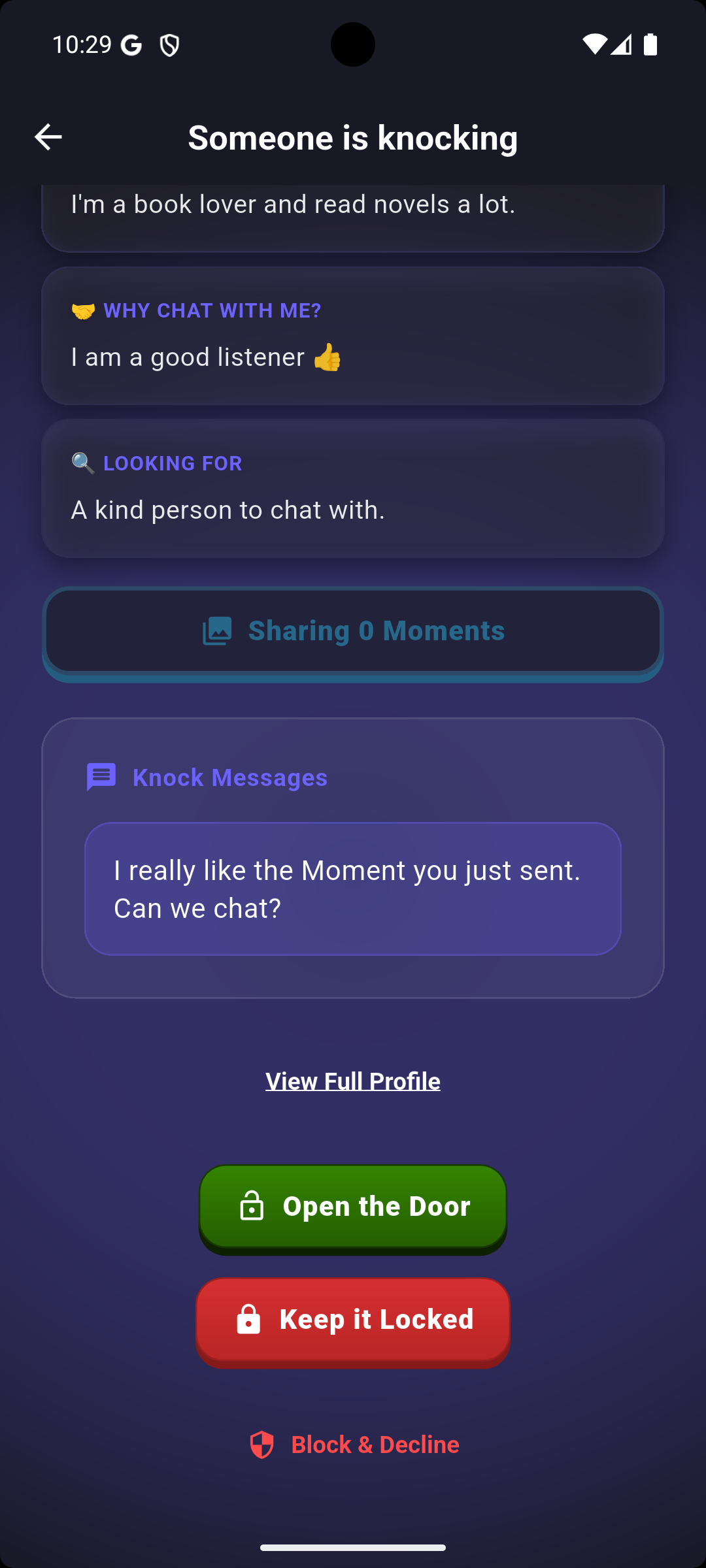
When another resident wants to start a private conversation with you:
- They Must Knock First: No one can instantly send you unsolicited messages or intrusive media. They must send a polite knock.
- Look Through the Peephole: Before opening your door, you can inspect their knocking persona, their chosen mood, their brief introductory note, and their community trust score.
- You Hold the Key: If the vibe feels right and you have the emotional bandwidth, you accept the knock and welcome them in. If you aren't feeling it, you can simply decline with a single tap—quietly, gracefully, and with zero awkward confrontation.
You are never cornered. Your boundaries are absolute.
3. Natural Ephemerality: Conversations That Breathe and Fade
One of the greatest sources of digital anxiety is permanence. When every text, vent session, or emotional revelation is archived forever in the cloud, you are naturally hesitant to be real.
In Talktive, conversations are designed to mirror real life. When you speak to a neighbor in a park, your words hang gently in the air, connect two hearts, and then dissolve into the breeze.
- Public community lounges and moments fade away automatically, ensuring that the building's common spaces remain fresh, timely, and free of outdated digital debris.
- Private chats expire naturally, lifting the heavy burden of message histories and allowing you to close chapters cleanly without leaving a trail of vulnerable disclosures behind.
Natural ephemerality keeps conversations light, safe, and focused entirely on the present moment.
4. Community Trust and Peer Vouches
Anonymity without accountability invites mischief. But traditional social media "accountability"—public shaming, mob pile-ons, and algorithmic outrage—destroys mental well-being.
Talktive takes a restorative, resident-driven approach through our Trust and Vouch System:
- After meaningful interactions, residents can vouch for one another, recognizing patience, warmth, and active listening.
- A resident's trust score reflects their track record of kindness inside the residence.
- Residents with high vouch scores are celebrated, while bad actors, spammers, and harassment attempts are rapidly identified and permanently removed from the premises.
"When a community rewards empathy rather than outrage, people naturally bring their best, kindest selves to the table."
Your Peaceful Sanctuary Awaits
Can anonymous chat actually be safe?
Yes—when it is crafted with empathy, protected by real boundaries, and built to honor human dignity.
Talktive is proof that you do not need to trade away your privacy to find safety, nor do you need to endure chaos to enjoy genuine, unburdened conversation. When you close your door behind you in our digital residence, your peace of mind is always protected.
Written by Talktive Editorial
Talktive is a quiet digital social residence—a safe haven to vent, confide, and find someone who listens without fear of judgment. Designed with zero personal data collection and natural ephemerality.
Looking for a cozy place to chat?
Download Talktive on Google Play to step into the residence. Safe, anonymous, and free forever.
Download Talktive on Google Play